Wednesday, August 14, 2019

Replicating Buffett

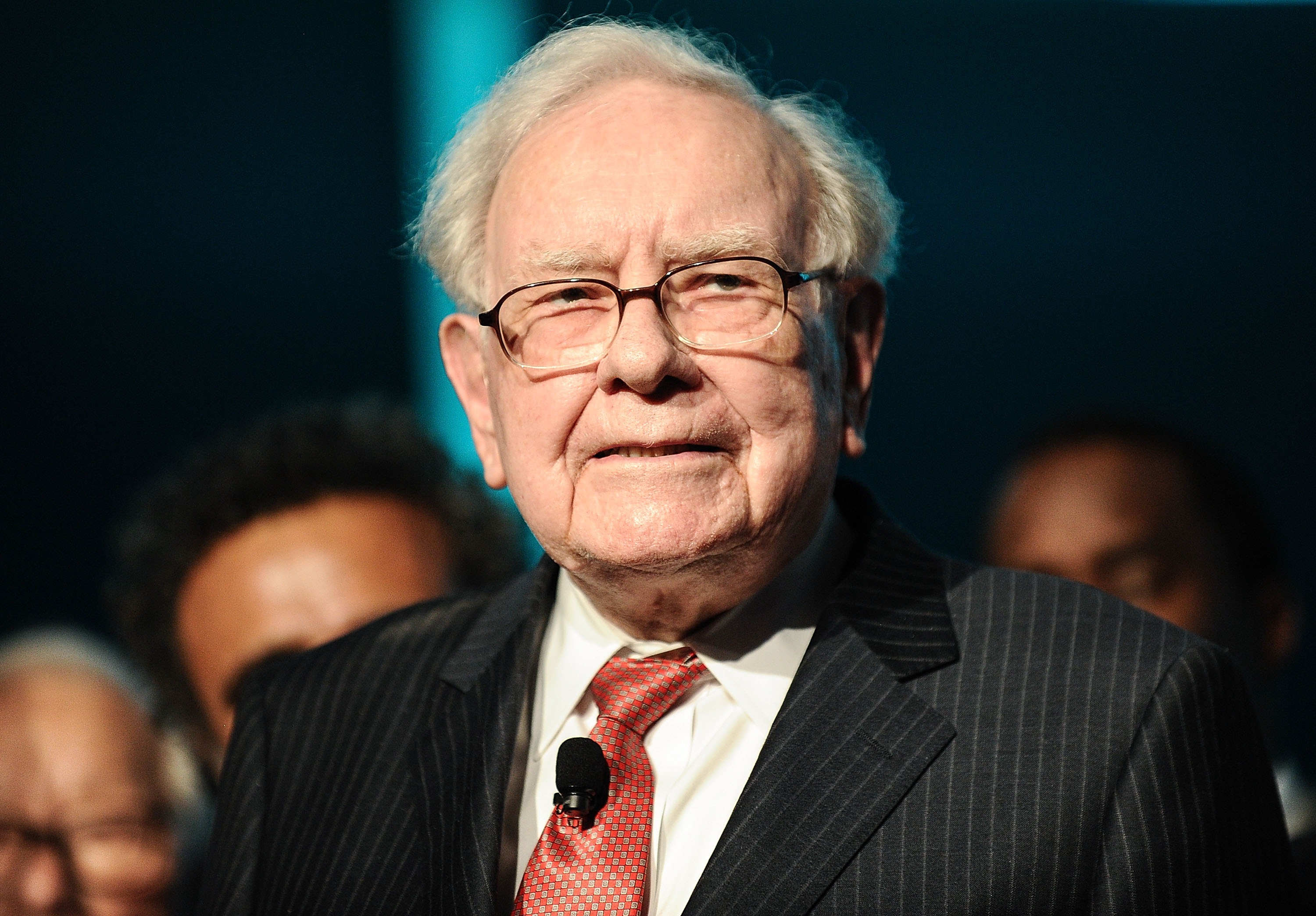
Image result for warren buffettI've often wondered why Warren Buffett's formula for building wealth is so hard to replicate.  I think a few things are at play that prevent the average investor from obtaining the sorts of returns Buffett has throughout his career:

Fear of uncertain outcomes
A misunderstanding of Buffett's entire approach
The wrong mindset and temperament

Fear of uncertain outcomes:  Even though Buffett's approach to investing is tried and true, it's not certain that someone, following Buffett's approach to a tee, will have the same results.  What if they enter the market right before a recession or crash and lose a large chunk of their net worth?  Buffett has the confidence from years of experience on his side and he obviously has the means to wait out a dip in the market.  In fact, these days, he looks forward to a dip.  His Berkshire Hathaway has so much cash on hand right now that he'd love to put some of it to work in the market but equities have recently been out of his buying range.  The hard part is waiting until the opportune time to place your bets.  And even then, with a rather concentrated portfolio of your best picks, your portfolio will likely be much more volatile than Dow Jones or an index fund.  Many people don't fare well with this sort of uncertainty.

This potential lack of a security net scares many potential investors off, as well, as they have families to take care of and other needs to be met.  Society also tends to frown upon the guy who leaves a secure, high paying job, to pursue wealth in another venture.  It appears irresponsible or greedy or lazy.  However, those who do make the jump and do it properly tend to be rewarded.  Read Charlie Munger's bio; he left a great career in law to pursue investing full time. 

Taking the first step is also difficult.  How do you know when to enter the market?  This, I believe, can't be learned from the sidelines, but must be obtained from experience.  But taking the first step in anything is difficult.  We often don't embrace change, but change is necessary.

A misunderstanding of Buffett's entire approach:  Many hear Buffett's name and think, "stock market genius".  In reality, Buffett has many more layers than his stock picking prowess.  He prefers to buy entire private businesses rather than parts of large companies via public trading.  He also suggests avoiding excessive debt, but if you understand his approach, he uses significant amounts of borrowed money (insurance "float") to invest in other businesses.  His debt is cheap or possibly free; "float" is the money his insurance companies collect as premiums that he can invest until a claim is placed and some money must be paid out to settle the claim.  Therefore, if his insurance underwriting team writes profitable policies, the premiums he collects less the administrative expenses becomes additional profit that he can invest.  He's basically being paid to borrow money!  It's brilliant!

While Buffett's stock market record is absolutely incredible, he never would have been able to take advantage of Mr. Market to the extent that he has, had he not bought privately held businesses that kick off significant cash and provide investable income via insurance float.  This is why I believe there is only one Warren Buffett.  Buying a business is daunting.  I know that from experience.  And it takes a number of years for many businesses to reach their full potential or even turn a profit.  This is such an important, yet under appreciated, aspect of Buffett's approach.  I would venture to say that those who study Buffett's philosophy and follow his advice, rarely buy businesses.  They are missing a key ingredient in duplicating Buffett's success.  Others have had success in the market like Buffett.  Read his, "The Superinvestors of Graham and Doddsville" article for evidence.  But the magnitude of his accomplishments was made possible by the cash kicked off from his private businesses.

The wrong mindset and temperament:  Buffett also ENJOYS the extreme long game, not because he has to, but it's simply his mindset.  He wants to be able to sleep at night stress free; a portfolio manager doesn't have that luxury.  Professional money managers can't touch Buffett because they need to keep up, year after year, with their colleagues and competitors.  A portfolio manager can't tell his boss to give him 5 years before reviewing his performance.  Buffett never had to answer to anyone but himself and his partners - and his partners had full faith in him. 

Individual investors are in the same boat.  They can't handle the ups and downs of the market and so they end up selling out at the wrong time.  They don't focus on the long game.  They don't have the confidence that things will work out.

Buffett is truly one of a kind and the goal doesn't need to be to attain greater wealth than him.  If one can accomplish a tenth of what he has accomplished, they will find themselves very well off.  To do that, you need to be comfortable with the uncertainty, understand the Oracle's entire approach, and keep a level head with a proper mindset.


Friday, December 7, 2018

Winning or Losing by Saving???

A few weeks ago, I came across this Instagram post from CNBC on a Grant Cardone quote. 


"You can skip spending $5 at Starbucks every day and save $10,000 over the next 5 years, but if you think $10,000 is going to change your life, you're not just broke, you're being stupid." - Grant Cardone

Tuesday, December 4, 2018

FIRE(D)!!!

FIRE(D) - Financial Independence Retire Early (by Default???).  So, I had planned on being out of the corporate workforce within two years to concentrate on my investments, property, and businesses.  Well, that plan was just accelerated after I was let go from my position this past Friday, 11/30/2018, due to downsizing.  So now, Decision Day approaches.  Now, the fun begins . . .

Thursday, February 11, 2016

Using Availability to Our Advantage

https://www.pinterest.com/k1408/quotes/
Marco Rubio has recently been taking a lot of heat for his robot-like performance at the most recent Republican national debate.  In case you somehow missed it, he repeated a stump line verbatim four times, completely out of context, in answering the moderator's questions.  Governor Chris Christie lambasted him on national television, calling Rubio out for being the robotic politician that Washington manufactures.  My initial thought, besides the feeling of embarrassment for him, was:  How can he not know what he is doing?  Why can't he stop himself from regurgitating the same canned line? 

I think it comes down to the availability heuristic.  From Wikipedia:
The availability heuristic is a mental shortcut that relies on immediate examples that come to a given person's mind when evaluating a specific topic, concept, method or decision.
Basically, your brain takes a shortcut and tells your mouth to spew the first thing that comes to mind; that is, the idea that is currently most available in your brain.  While this heuristic typically serves your brain beneficially in most every day cases - who would enjoy conversing with someone who had to put 10 minutes of thought into each carefully chosen sentence? - it has a tendency to choke under pressure. 

Put yourself in Rubio's shoes - or even Rick Perry, who infamously forgot the third government agency he would drop in order to cut federal spending at a debate during his 2012 presidential campaign.  Or, think of when your boss walks in unexpectedly and peppers you with questions on progress or schedule or budget - items that maybe you hadn't thought about yet today as your mind was focused on resolving a more technical issue currently at hand.  You freeze and spout out the first thing that somewhat coherently makes sense, even if it isn't 100% accurate.  You may even repeat yourself a couple of times, using your line as filler material in hopes that a more lucid thought will quickly materialize.

Daniel Kahneman and Amos Tversky discuss this phenomena at depth and provide examples of the biases created from availability in their classic 1974 paper, "Judgment Under Uncertainty:  Heuristics and Biases" (pdf. version of original article here).  One such analogy illustrates how the risks of an expedition may be significantly overvalued if those risks are vivid and come to mind easily.  How many people do you know who are afraid to swim in the ocean because of the possibility of a shark attack - which, based on historical evidence, is highly unlikely to occur?  For whatever reason - be it Hollywood movies or the gruesome picture we imagine in our heads - the image is vivid and easily recallable, forcing us to put much more weight on the likelihood that it will occur than it actually deserves.

And it's not just in what we say and how we react to social situations.  It is also in our private actions and decisions.  Take your finances, for example.  Say you began to invest in 2006 or so and, since then, you casually follow the overall stock market.  You take a diversified, conservative investing approach - maybe a few blue chips, but mostly Vanguard funds, as your financial advisor recommends.  2008 comes along and wipes out 40% or more of your holdings.  You panic, sell out, and lick your wounds.  The market continues to drop and even though you know the market has historically produced positive returns since its inception, you stay on the sidelines, missing out on the eventual massive recovery.  Why?  Because the only thought, the available thought, in your mind is the vivid memory of your losses.  You don't care what the experts say, you're not screwing around with stocks ever again. 

The availability heuristic messes with our rational thought.  Economists like to believe that humans are rational thinkers, but rational thinking is not innate.  Everyone knew the 2008 market was going to correct - and correct it did!  Those on the sidelines missed out on enormous gains.  The rational move would have been to dig deep and invest more.  A killing would've been had.  But our mind isn't innately wired to think like that - but we can train it to. 

Charlie Munger in his revised "Psychology of Human Misjudgment", gives this gem of advice:

The great algorithm to remember in dealing with this tendency is simple: An idea or a feat is not worth more merely because it is easily available to you.
If we force ourselves to undervalue the first idea that pops into our minds, we can enable ourselves to make more rational decisions.  The overwhelming affect of the 2008 crash left vivid memories in investors' brains and overshadowed the last 100 years of positive performance.  Similar reactions took place in those who lived through the 1930's Great Depression.  Story after story can be found of gun shy businessmen, bankers, and investors.  Families put their money under their mattresses or in safes where it could never again be lost in the financial markets.  We need to get beyond that train of thought and force rationality into our minds.

An even more interesting strategy is to force yourself to think rationally when you have time to do so.  Read the thoughts of good decision makers.  Read Warren Buffett's letters to his shareholders to get a sense of how he reaches rational business decisions.  They are intriguing and can be applied to personal finance as well as large scale investment decisions.  Read Benjamin Graham to understand how to rationally value a business or Kahneman to understand the biases your mind subconsciously utilizes.  Rubio and Perry could learn a thing or two from these guys, like don't count on canned answers, for one.  Had they been comfortable within their respective platforms and spent their mental energy on thoroughly fleshing out their political positions, they wouldn't need to bank on recalling over-used speeches that have limited upside but large downside risk.

Your brain can be wired to make rational decisions - not by being an intuitively rational thinking machine - but by trickery; use your brain's instinctive mental shortcuts to your advantage.  The more rationality you constantly feed your brain (via books, education, etc.), the more subconscious, rational decisions will be automatically made. 

Thursday, November 19, 2015

Confirmation Bia$

http://www.quotehd.com/imagequotes/authors52/tmb/philip-crosby-quote-making-a-wrong-decision-is-understandable-refusing.jpg
The recent attacks in Paris, I hope we can all agree, were tragic.  As the friends and relatives of the victims continue to mourn, we turn on the news every morning to updates on the search for the suspected attackers.  And, in the aftermath, social media fills up with opinions on the Syrian refugees immigrating to America in search of a better life and, more importantly, peace.  Fear abounds as to whether potential terrorists will use the opportunity to enter the country and plot further attacks on our own soil. 

Log in to Twitter or Instagram to find yourself inundated with fiery opinions and impassioned debates of commenters either siding for or against the 31 governors who have decided to not welcome Syrian refugees into their states.  58 comment responses later and nothing has been resolved.  The end result:  a lot of mud-slinging, anger-fueled rage, hot tempers, and little resolution.  What we DON'T have is a significant amount of level-headed, clear minded, well reasoned discussion.  How does this happen every time a new hot button issue arises?  How do we not improve our ability to better resolve a discussion and not take the bait some attention seeking poster hangs out there in a Facebook rant?  Why, after so many of these episodes, do we still constantly let our emotions impede our reasoning?

Well, one reason might be that social media provides a platform for this type of conversation - a back-and-forth exchange where one can take time to flesh out his argument, use a thesaurus to find a bigger, more complicated word, and dial up a Wikipedia article or two to find under-scrutinized pieces of information to back his side prior to hitting "reply".  But the root of the problem goes deeper than that.  We are pushed to partake in these disputes because of Confirmation Bias.